
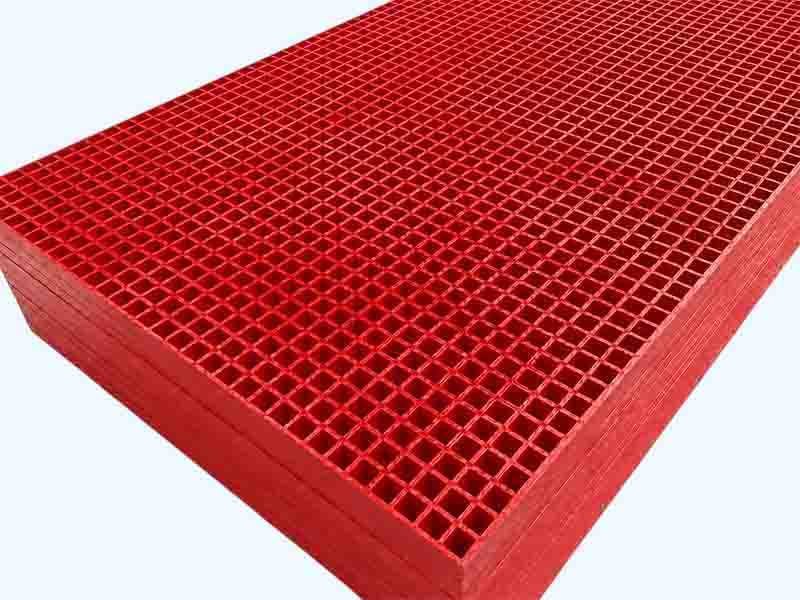
Fire performance that polyester cannot match. Standard polyester resin softens and burns when exposed to flame, contributing fuel to the fire. Phenolic resin chars instead—it forms a carbonaceous surface layer that insulates the underlying material and resists further combustion. Flame spread ratings generally achieve Class 1 (flame spread ≤ 25) when tested per ASTM E‑84, with smoke development index typically ≤ 100—significantly lower than standard FRP resins. This is why specifiers for transit tunnels and offshore living quarters commonly reach for this material.
Low smoke, low toxicity. In a tunnel fire or an enclosed platform evacuation, what kills people is not always the flame—it is often the smoke. Phenolic resin typically emits less visible smoke and lower toxicity fumes compared to polyester or vinyl ester under fire conditions. This is important in any occupied underground space where ventilation is limited and escape routes are measured in minutes.
High‑temperature dimensional stability. Phenolic grating generally holds its structural integrity at continuous service temperatures up to 150°C, well beyond the 80–100°C ceiling of polyester and vinyl ester systems. For areas near heat sources—furnace platforms, foundry walkways, flue gas access—this margin is significant.
Corrosion resistance as a secondary benefit. Phenolic resin also commonly resists a broad range of chemicals, including many organic solvents and acids. While fire performance is the primary reason to specify it, the chemical resistance provides a genuine operational bonus in plants where both heat and corrosive fumes are present.
Common installation environments include underground metro ventilation walkways, offshore platform accommodation modules, tunnel emergency egress paths, military vessel machinery spaces, and foundry furnace platforms. The common thread is enclosed or occupied space where fire performance is non‑negotiable.
Standard mesh size is 38 mm × 38 mm square mesh for bidirectional strength. Panel thickness typically ranges from 25 mm to 50 mm, with thicker panels for higher loads or longer spans. Standard panel dimensions are up to 1.2 m × 3.6 m, with custom sizes available on request. Surface finish is grit top as standard for slip resistance, with smooth finish available. Resin system is phenolic throughout—no coating, no additive, no post‑treatment required for the fire rating.
Proven in Field
"Our tunnel ventilation access platforms had to meet strict fire and smoke requirements—polyester grating was not an option. The phenolic panels passed the fire engineering review with no complications, and the installation team appreciated that they handled like standard FRP despite the specialised resin."
— Fire Safety Engineer, Metro Rail Infrastructure Project
Discuss Your Fire‑Rated Grating Requirements
WayTong supplies phenolic FRP grating in standard panel sizes with ASTM E‑84 Class 1 fire ratings, low smoke emission, and high‑temperature stability. Contact our technical desk for load‑span tables, fire engineering documentation, and project‑specific compliance support.
Discuss Project RequirementsPhenolic grating is part of the WayTong FRP Grating range, which also includes standard molded, pultruded, covered, and heavy‑duty grating options. For complete fire and mechanical performance data, see the ASTM Standards Summary.